

7 Common Calgary Acreage Landscaping Mistakes to Avoid
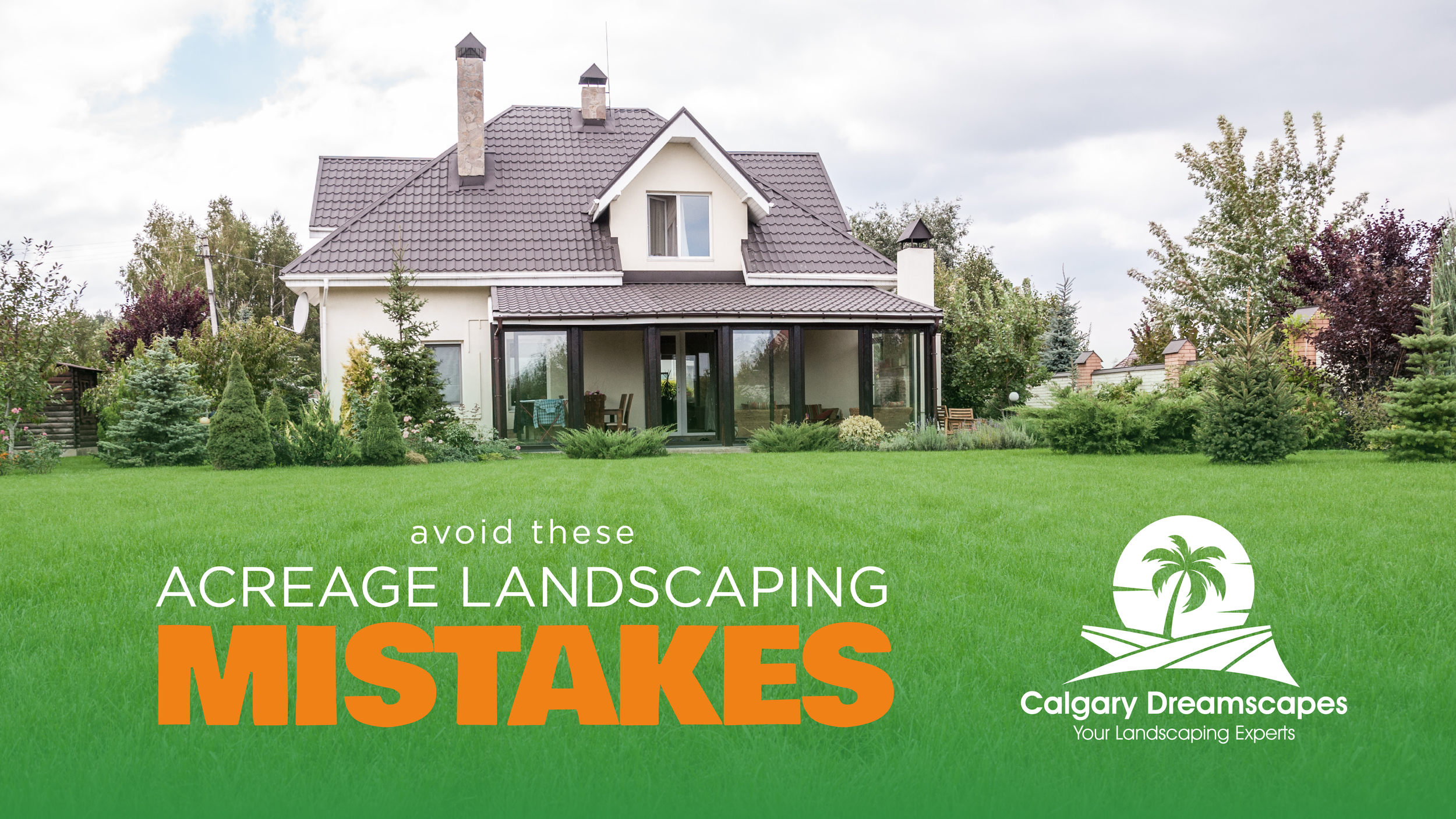
Acreage landscaping around Calgary is a different beast than a typical city yard: bigger distances, more exposure to wind and sun, more drainage variables, and higher stakes if you get it wrong. The good news is most “expensive” problems are predictable—and preventable—when you plan like a pro from day one.
Here are the top seven acreage landscaping mistakes for you to avoid. If you’re not interested in doing the work yourself, Calgary Dreamscapes is highly experienced in acreage landscaping and would love the opportunity to quote your next project. Contact us today! Also see:
1) Starting Without a Master Plan
Map zones such as arrival, parking, living, utility, and views
Plan landscaping phases that still look “finished” after each step
Confirm access routes for equipment and materials beforehand
On an acreage, it’s easy to install a patio or plant trees and only later realize you blocked an ideal future developmental area, service route, or recreational space. A well-thought-out landscape design prevents rework and keeps your investment pointed at the highest-impact areas (front approach, main outdoor living, and key sightlines from the home).
Phasing matters because rural residential landscaping projects often grow over seasons; you want each phase to function on its own, not feel like a construction site. Access planning is huge—materials, skid steers, and excavation need a clear route that won’t destroy your “finished” areas. A professional plan also anticipates utilities, drainage corridors, and the location of snow storage.
2) Ignoring Grading and Drainage
Grade away from foundations and high-traffic zones
Use swales, dry creeks, or rock channels intentionally
Treat runoff like a system, not a single “low spot”
Drainage is one of the most common acreage landscaping money-pits because water travels farther and faster on open, expansive lots. If your grading is wrong, you can end up with pooling near the home, muddy “goat trails,” icy winter patches, and hardscape bases that fail. The fix is rarely cheap because it often requires tearing out finished surfaces to regrade properly.
Instead, design drainage/runoff routes from the start — where water comes from, where it crosses, and where it leaves. Features like dry creeks can be both functional and beautiful when integrated into acreage landscaping. A drainage-first approach also protects expensive elements like retaining walls, patios, and walkways.
3) Not Building a Proper Base for Hardscaping and Driveways
Measure base depths accordingly, and build for loads and freeze/thaw
Separate layers properly, such as subgrade, base, bedding, and surface
Compact in lifts so patios and paths stay level
Hardscaping failures on acreages often appear as settling, heaving, shifting pavers, or cracked edges, especially after harsh winters and freeze-thaw cycles. The mistake is thinking a patio base is “good enough” because it looks fine the day it’s installed. On rural properties, you’re often dealing with heavier vehicle use such as ATVs, trailers, and equipment, while the lot itself could have more variable soils, so the base for any patios, driveways, or other “hard” features must be reinforced to serve as intended and last accordingly.
Proper compaction isn’t optional; it’s what keeps your investment from moving. This is where hiring experienced builders pays off because the “invisible” work is what makes the visible work last. Calgary Dreamscapes builds patios, walkways, retaining walls, driveways, and natural stonework as part of our full-service landscape construction offering, specializing in hardscapes, and we would love the opportunity to look at your project!
4) Choosing Plants That Can’t Handle an Acreage Lifestyle
Pick plants for site conditions, not aesthetic appeal
Group by water needs to avoid dead plans and vegetation
Protect young trees/shrubs from damage while they grow
Acreage lots near Calgary tend to be more exposed to the elements, with stronger sun, more wind, and less shelter than many city lots. That means plants that thrive in a protected backyard can struggle or die when they’re blasted by wind or baked by the sun; choose native flowers and perennials that will last. Another common mistake is mixing plants with wildly different water needs in the same bed, making it hard to irrigate efficiently.
Early protection matters too: young trees and shrubs can be damaged before they ever establish a strong, deep root system. A smart softscape plan balances beauty with survivability and maintenance realities. If you want a landscape that looks great without constant babysitting, treat plant selection like engineering, not decoration.
5) Installing Outdoor Lighting as an Afterthought
Light paths, steps, and transitions for safety first
Plan power runs before hardscape is locked in
Use lighting to highlight stonework and feature areas
On large rural properties, proper lighting does more than “look nice”—it helps you navigate long walkways, steps, gates, and outdoor living areas safely after dark. The common mistake is finishing patios, paths, and walls first, then trying to retrofit wiring later (which often means cutting or redoing work).
A lighting plan should be part of your overall layout so cable routes and fixtures are clean, hidden, and serviceable. Done right, lighting also adds a premium “wow factor” by emphasizing natural stonework, feature trees, and entertaining zones. It just so happens that Calgary Dreamscapes offers outdoor lighting and designs layouts to enhance both hardscapes and softscapes!
6) Underestimating Materials, Logistics, and Budget
Budget for delivery, equipment, and site access challenges
Expect higher quantities (rock, soil, sod) than city projects
Build a contingency for surprises in rural ground conditions
Acreage projects can look straightforward on paper, then balloon in cost because everything is bigger and farther from the curb. Rock, soil, gravel, and boulders add up fast – and it’s not just the material, but also hauling, placement, and equipment rentals. Another mistake is failing to budget for basic needs such as base gravel, geotextiles, drainage rock, and proper disposal of old soil, concrete and debris.
Ground conditions can also surprise you on rural lots, and surprises get expensive when you’re moving large volumes. For example, gaping holes in the ground may need to be filled with soil, rock, or, in worst-case scenarios, concrete, depending on your landscaping and construction plans. Therefore, getting a fully investigated quotation early on for your next project is key. If your goal is a premium-acreage landscape, proper budgeting is key to ensuring your expectations are met.
7) Doing It Yourself vs Relying on a Professional Landscaper
Get a clear scope, timelines, and change-process in writing
Use pros for structural work such as walls, stairs, drainage, driveways
Prioritize communication so problems don’t quietly compound
On rural acreages, the biggest mistakes aren’t always design-related, but often execution-related. Doing it yourself (DIY) can work for small cosmetic projects, but structural landscaping for retaining walls, stairs, significant grading, and major hardscapes is where errors become costly and sometimes unsafe. Another common pitfall is vague project management: no clear expectations, shifting decisions midstream, and no quality checks at key milestones.
Professional crews bring proper methods, the right equipment, and the much-needed experience that prevent costly rework and delays. Calgary Dreamscapes is an experienced, professional, and reputable company specializing in rural landscaping, with a quality control process and open communication throughout the project. If you want a high-end acreage build that stands the test of time, choose craftsmanship over shortcuts.
Questions About Your Rural Landscaping Project?

Contact us today to schedule a consultation or request a quote, and let’s turn your acreage into a stunningly beautiful outdoor space you and your loved ones will enjoy for generations.